The Duravant family of operating companies serve the food processing, packaging and material handling segments.















Arpac Brand Robotic Palletizer Model
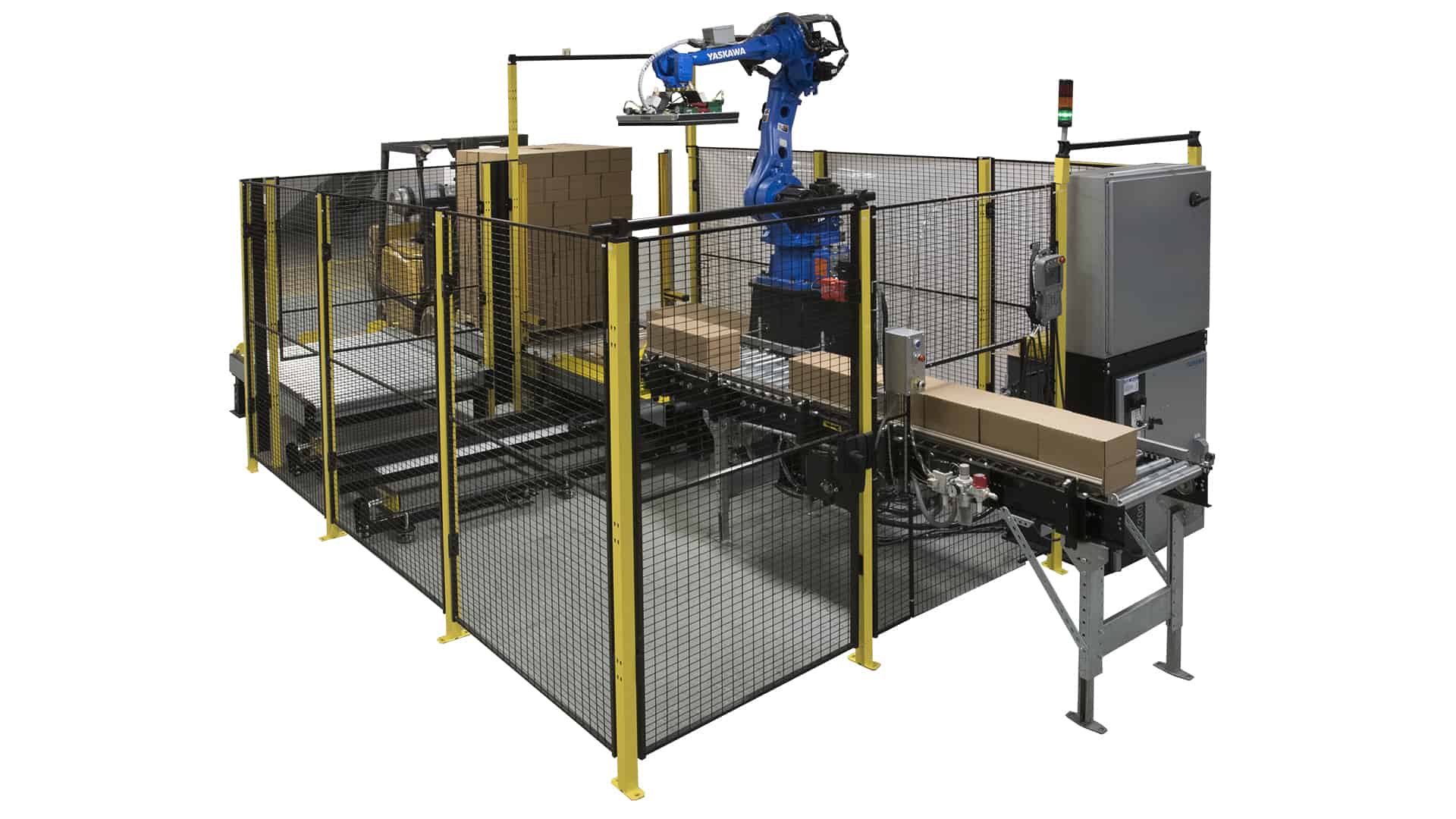
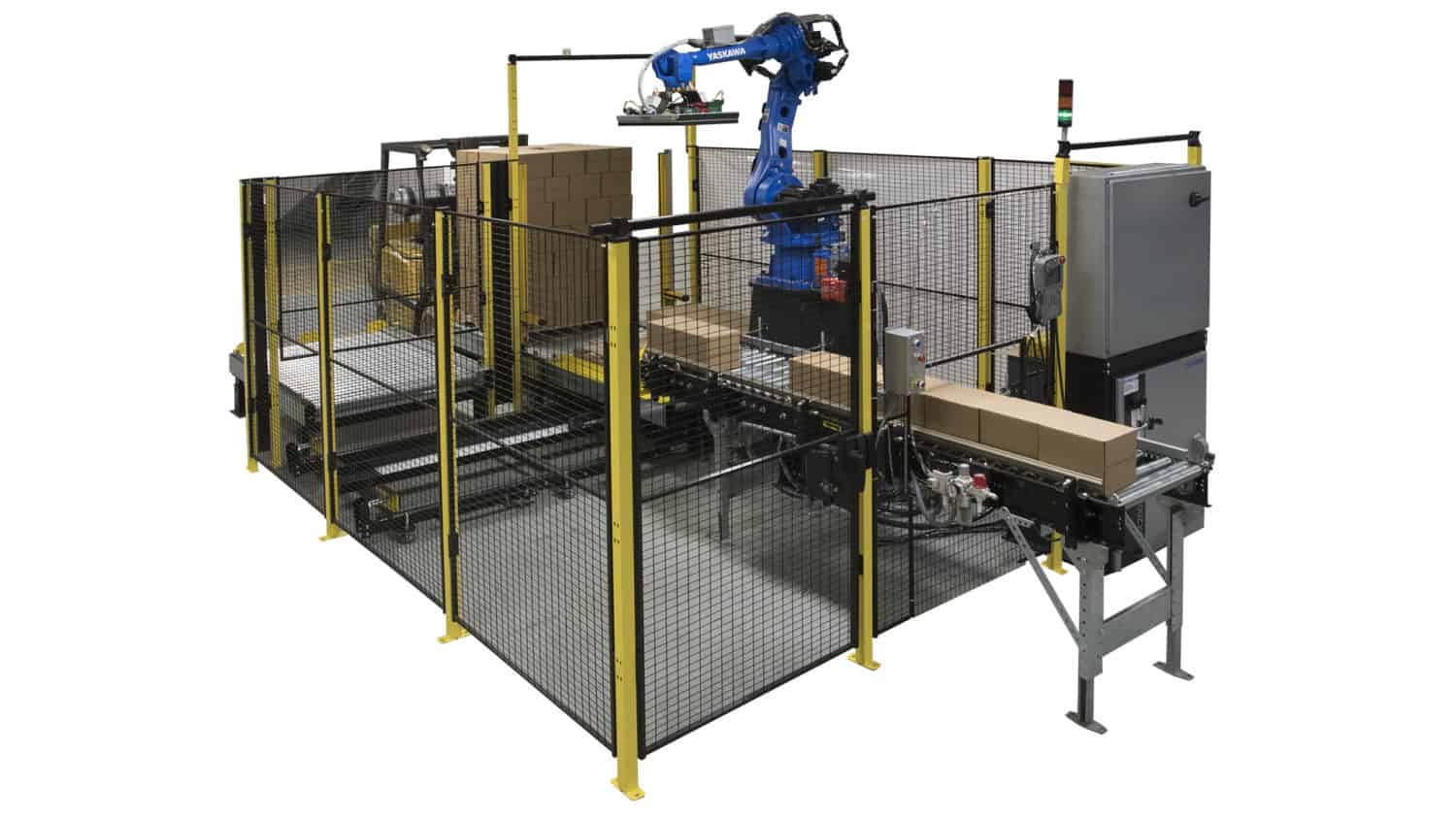
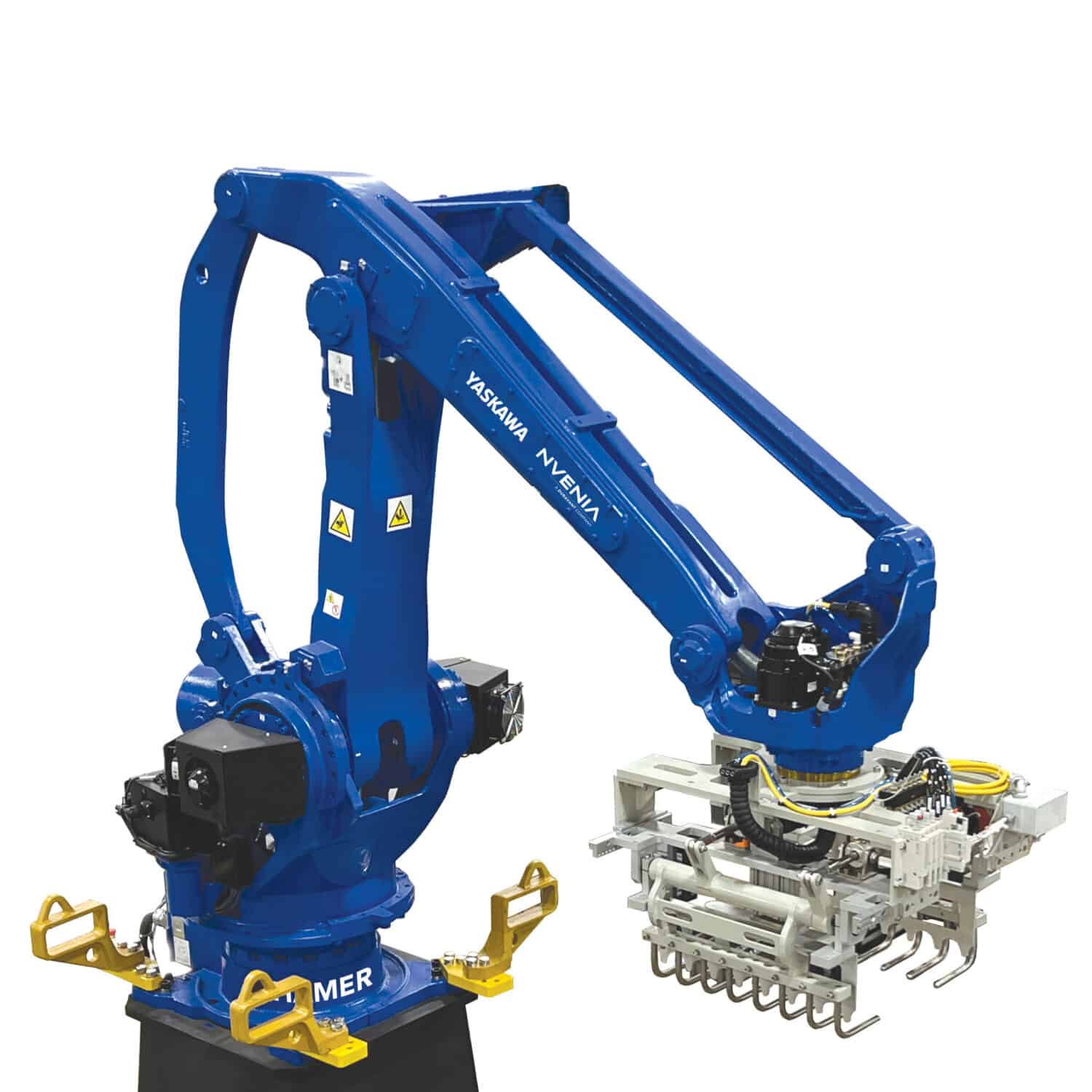
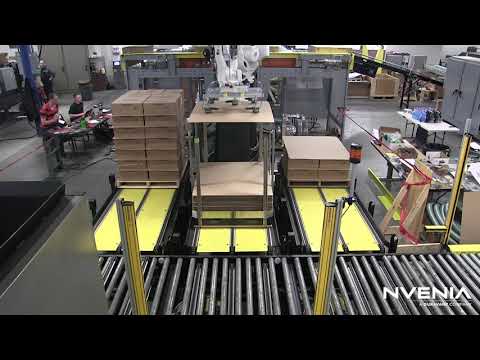
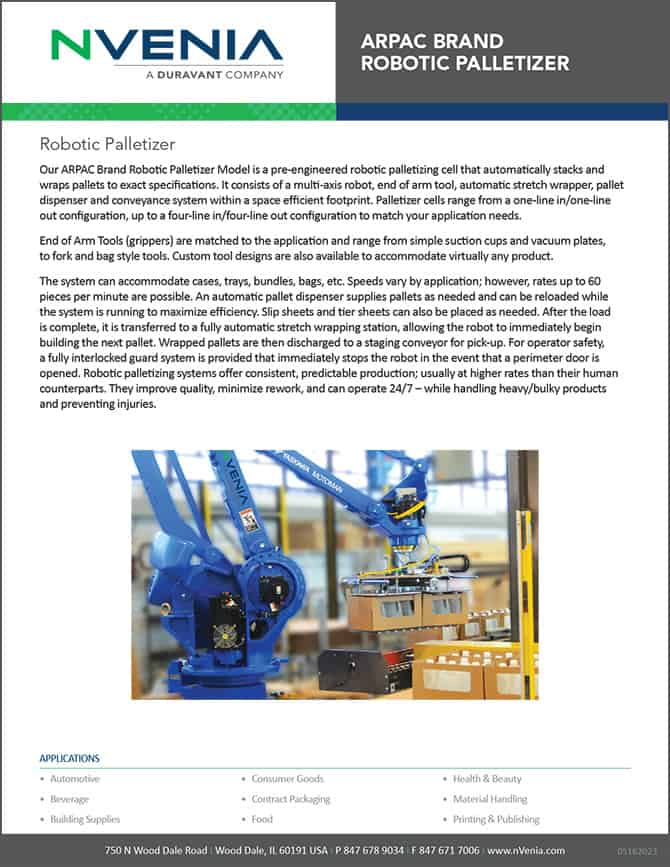
Our Arpac Brand Robotic Palletizer Model is a pre-engineered robotic palletizing cell that automatically stacks and wraps pallets to exact specifications. It consists of a multi-axis robot, end of arm tool, automatic stretch wrapper, pallet dispenser and conveyance system within a space efficient footprint. Palletizer cells range from a one-line in/one-line out configuration, up to a four-line in/four-line out configuration to match your application needs.
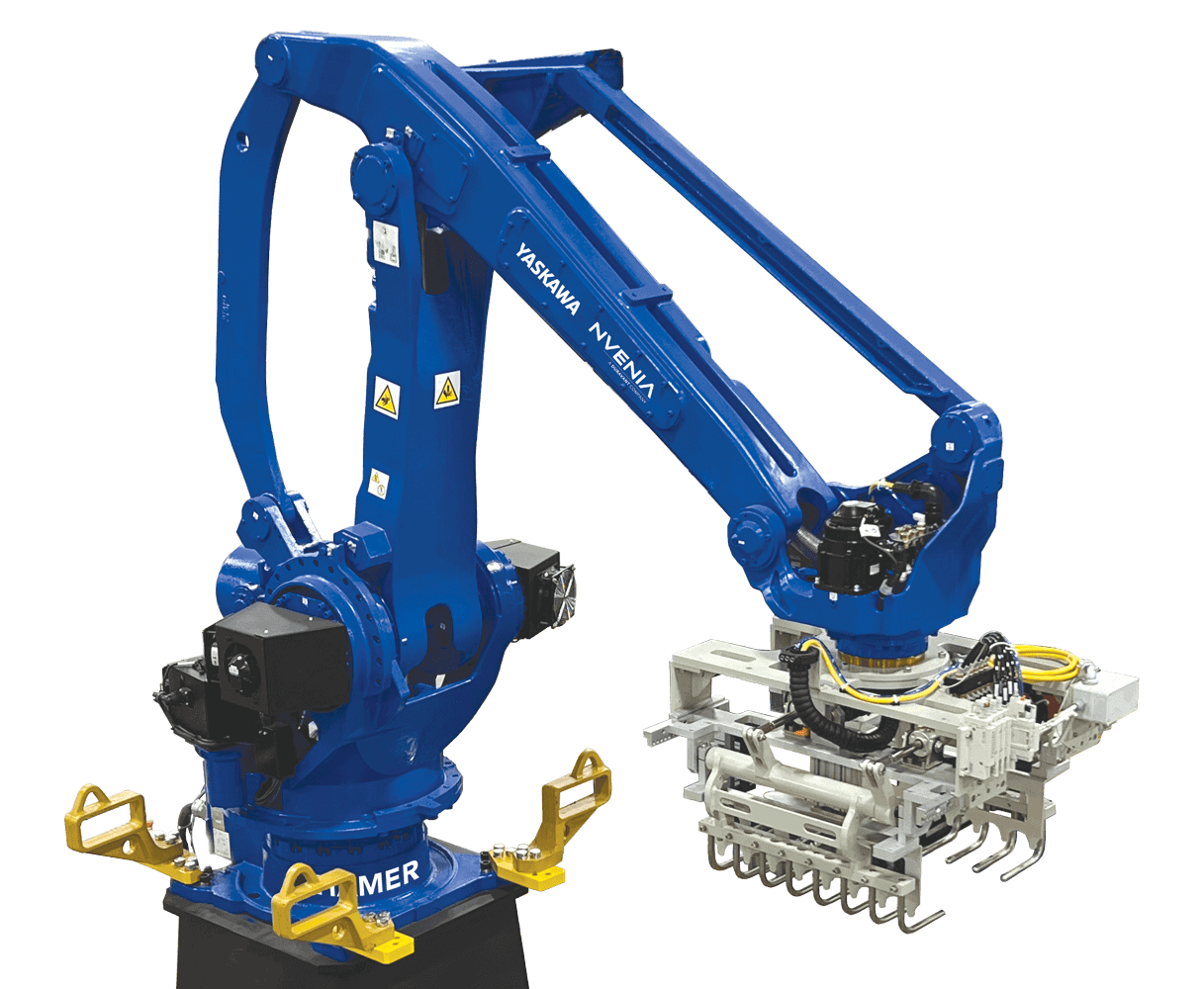
End of Arm Tools (grippers) are matched to the application and range from simple suction cups and vacuum plates, to fork and bag style tools. Custom tool designs are also available to accommodate virtually any product.
The system can accommodate cases, trays, bundles, bags, etc. Speeds vary by application; however, rates up to 60 pieces per minute are possible. An automatic pallet dispenser supplies pallets as needed and can be reloaded while the system is running to maximize efficiency. Slip sheets and tier sheets can also be placed as needed. After the load is complete, it is transferred to a fully automatic stretch wrapping station, allowing the robot to immediately begin building the next pallet. Wrapped pallets are then discharged to a staging conveyor for pick-up. For operator safety, a fully interlocked guard system is provided that immediately stops the robot in the event that a perimeter door is opened. Robotic palletizing systems offer consistent, predictable production; usually at higher rates than their human counterparts. They improve quality, minimize rework, and can operate 24/7 – while handling heavy/bulky products and preventing injuries.
Are you interested in this product?
We are here to help.
Featured Video
Features
Standard:
- 5-Axis 80kg (176lb) palletizing robot accommodates products up to approximately 100 lbs
- Dedicated robot controller
- A variety of gripper options for all types of packages
- 10’ infeed conveyor with pneumatic product separation
- Automatic pallet dispenser, with 10 pallet magazine and drag chain discharge conveyor
- 60” pallet build station conveyor
- Integrated conveyorized turntable stretch wrapper up to 45 loads/hour
- 60” pallet discharge conveyor
- Allen-Bradley® CompactLogix™ PLC
- PanelView™ Plus 1000 – 10 inch color HMI
- Heavy duty construction with powder-coated finish
Options:
- 80kg, 100 kg, 160 kg, 190 kg, 300 kg, 500 kg or 800 kg 4 & 5 axis robots
- Vacuum plate, fork style or bag style end of arm tool
(custom designs also available) - Layer sheets – gripper tooling and manually
loaded sheet rack - “Smart” counting style gated infeed conveyor
(supports multiple products with no changeover) - 2 in / 2 out configuration
- 3 in / 3 out configuration
- 4 in / 4 out configuration
- Full line system integration
Standard Specs
Standard Specs
Each system is configured to your specific application. Please contact your local nVenia representative to assist you in designing a robotic palletizing system suited to your needs and budget.
Document / Resources
Document / Resources
FAQs
FAQs
How do I choose between a robotic and conventional palletizer?
The right palletizing solution depends on your product type, production rates, available floor space, SKU variety, and long-term automation goals.
Robotic palletizers are typically the best fit for operations that require flexibility, frequent changeovers, multiple SKUs, or custom pallet patterns. nVenia's Hamer RPM and Arpac Arbot palletizers can handle a wide range of products while adapting to changing production needs.
Conventional palletizers are often preferred for high-volume applications running consistent products where maximum throughput is the primary objective. nVenia's T‑Tek conventional palletizers deliver fast, reliable performance for demanding production environments.
Because every application is different, nVenia's engineering team works closely with customers to evaluate their products, production goals, and facility requirements to recommend the palletizing technology that provides the best long-term value.
What are the benefits of automating palletizing with nVenia equipment?
Automating palletizing with nVenia helps increase throughput, improve load consistency, reduce labor requirements, and enhance workplace safety. Our team works closely with customers to evaluate their products, production goals, and facility requirements to recommend the best-fit solution—from Hamer RPM bag palletizers and Arpac Arbot robotic and collaborative palletizers to T‑Tek conventional palletizers.
Because nVenia offers a broad portfolio of packaging and automation equipment, we can often deliver complete packaging line solutions that include bagging, filling, conveying, palletizing, and stretch wrapping from a single supplier. Combined with our aftermarket parts, field service, training, and technical support, nVenia helps customers maximize uptime and get the most from their automation investment.
What palletizing options are available across nVenia palletizing systems?
nVenia palletizing solutions are designed around your product type, throughput, and automation needs, offering a full range of robotic and conventional palletizers:
- Bag Palletizing Systems (Hamer RPM)
Best for bags of bulk products. Flexible robotic palletizer solutions support up to 27 bags/min and offer semi- or fully automatic configurations.- Case & Rigid Product Palletizing (Arpac Arbot)
Ideal for cases, bundles, and packaged goods. Highly customizable robotic palletizers can handle multi-SKU, multi-build, multi-infeed operations. Semi-automatic, fully automatic, and collaborative options are available. Rate vary by application but can reach speeds up to 60 parts/min.- High-Speed Palletizing (T‑Tek Conventional)
Designed for uniform, high-volume production. Conventional layer palletizers deliver up to 200 cases/min for maximum throughput."
When is a collaborative palletizer the right choice?
Collaborative palletizers can be an excellent solution for operations with lower production rates, limited floor space, or facilities taking their first step into palletizing automation. Their smaller footprint and simplified deployment can make automation more accessible for certain applications.
However, as production demands increase, many manufacturers find that a traditional industrial robotic palletizer offers greater throughput, payload capacity, flexibility, and long-term scalability. For higher-volume operations or future growth plans, an industrial robotic palletizer often delivers the best overall value.
At nVenia, we help customers evaluate their production requirements, available space, and long-term objectives to determine whether a collaborative palletizer, industrial robotic palletizer, or conventional palletizer is the right fit. Our goal is to recommend the solution that best supports your operation—not a one-size-fits-all approach.